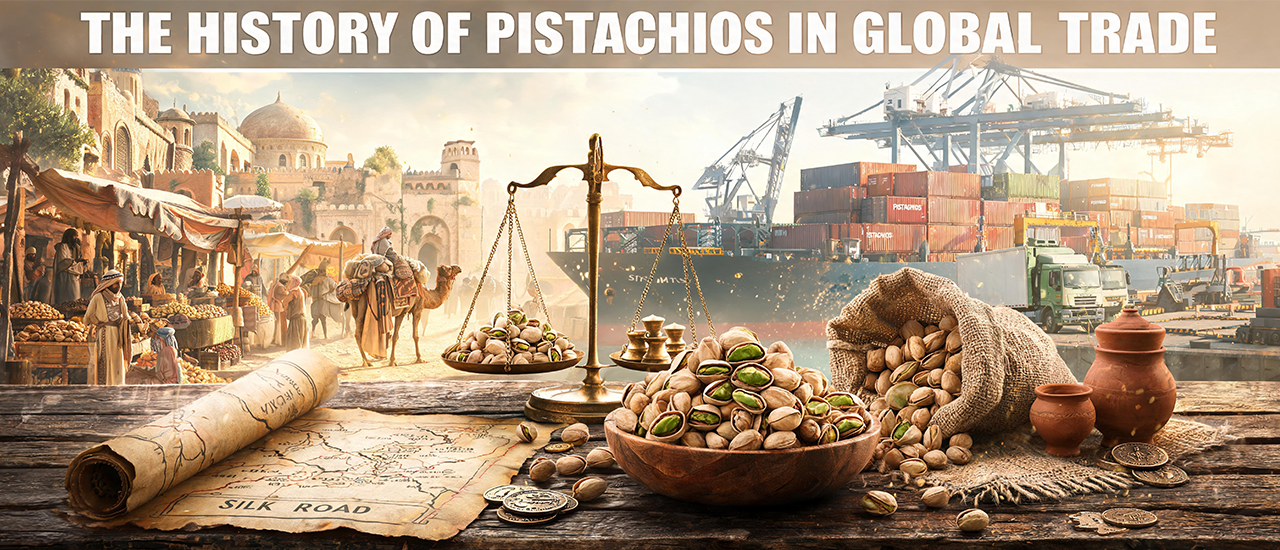
For centuries, pistachios have held a valuable position in international food commerce. From ancient Persian kingdoms and Silk Road caravans to modern container shipping and global wholesale distribution, pistachios have evolved into one of the world’s most in-demand agricultural commodities. Today, the growing popularity of healthy snacks, premium confectionery products, bakery applications, and plant-based nutrition has significantly increased demand for high-quality wholesale pistachios across global markets.
In the UAE and the wider Gulf region, pistachios are deeply connected to culinary traditions, hospitality culture, and premium food manufacturing. As global food trade continues to expand, pistachios remain an essential commodity for importers, wholesalers, distributors, supermarkets, and industrial food processors seeking reliable sourcing solutions.
Ancient Origins of Pistachios
The history of pistachios dates back thousands of years. Historians believe pistachio trees originated in Central Asia and the Middle East, particularly in regions that are now Iran, Afghanistan, and parts of Turkey. Archaeological evidence suggests that pistachios were consumed as early as 7000 BC, making them one of the oldest cultivated nuts in human history.
Pistachio trees thrived in dry climates with long, hot summers and minimal rainfall. These environmental conditions made the Middle East an ideal region for pistachio cultivation. Ancient civilizations quickly recognized the nut’s nutritional value, long shelf life, and suitability for trade over long distances.
In ancient Persia, pistachios were considered a symbol of wealth and prosperity. Royal families and merchants highly valued the commodity because it could be stored and transported efficiently during long commercial journeys. This practicality helped pistachios become a significant trade product throughout ancient trade networks.
Pistachios in Persian and Middle Eastern Trade History
Persian traders played a major role in spreading pistachios across neighboring regions. As commerce expanded throughout the Middle East, pistachios became integrated into regional economies and culinary traditions.
Caravans traveling through historic trade routes carried pistachios alongside spices, dried fruits, silk, and other valuable goods. The nut became especially popular because of its durability and high energy value, making it ideal for merchants and travelers crossing deserts and mountainous regions.
The Middle East eventually became one of the world’s earliest centers for pistachio commerce. Markets in Persia, Mesopotamia, and the Levant distributed pistachios to surrounding territories, creating long-standing demand across Mediterranean and Asian trading communities.
Pistachios also became culturally significant throughout the Arab world. They were widely used in traditional sweets, desserts, pastries, rice dishes, and hospitality offerings. This strong cultural association continues today, particularly in Gulf countries where pistachios remain an essential ingredient in premium food products.
The Silk Road and International Pistachio Expansion
One of the most important chapters in the history of pistachios in global trade was their movement along the Silk Road. This ancient network connected Asia, the Middle East, and Europe through extensive commercial routes.
Merchants transported pistachios across Persia into China, India, the Mediterranean region, and eventually Europe. As traders exchanged goods between civilizations, pistachios gained recognition for their flavor, nutritional value, and commercial potential.
The Silk Road helped transform pistachios from a regional agricultural product into an internationally traded commodity. Over time, cultivation techniques spread into new territories, allowing additional regions to begin producing pistachios commercially.
The expansion of maritime trade later accelerated pistachio exports even further. Mediterranean ports became critical hubs for distributing nuts, spices, and dried fruits to European markets. This trade activity contributed to the growing economic importance of pistachios within agricultural commerce.
Mediterranean Influence and European Demand
As pistachios entered Mediterranean markets, they became increasingly popular among European consumers. Countries such as Italy, Greece, and Spain incorporated pistachios into local cuisines and confectionery industries.
European demand grew steadily during the medieval and early modern periods, particularly among wealthy households seeking premium imported foods. Pistachios became associated with luxury desserts, specialty bakery products, and gourmet culinary applications.
The Mediterranean climate also supported limited pistachio cultivation, helping regional production increase gradually. However, Middle Eastern producers remained dominant suppliers due to their historical expertise and favorable growing conditions.
By the 19th and early 20th centuries, pistachios had established themselves as a recognized international commodity. Improvements in transportation, packaging, and trade logistics enabled larger export volumes and broader market access.
The Evolution of Modern Pistachio Exports
The modern pistachio industry experienced a major transformation during the 20th century. Commercial agriculture, mechanized harvesting, advanced irrigation systems, and international trade agreements helped scale production significantly.
Iran remained one of the leading pistachio producers and exporters for decades due to its ideal climate and deep agricultural heritage. Turkish pistachios also gained strong international demand, particularly for premium culinary applications and confectionery manufacturing.
Later, the United States emerged as a major global pistachio producer, particularly in California. Large-scale farming operations, advanced agricultural technologies, and efficient export infrastructure allowed the U.S. to become one of the world’s largest suppliers of wholesale pistachios.
Today, the global pistachio trade includes multiple producing countries serving diverse international markets. Major pistachio-exporting nations include:
- Iran
- UAE
- United States
- Turkey
- Syria
- China
- Greece
- Spain
Each producing region offers distinct flavor profiles, kernel sizes, processing methods, and pricing structures that cater to different segments of the international market.
Rising Demand for Wholesale Pistachios in the UAE and Gulf Markets
The UAE has become a strategic hub for global food trade and re-export activities. With its advanced logistics infrastructure, world-class ports, and strong international connectivity, the country plays a central role in distributing agricultural commodities throughout the Middle East, Africa, and Asia.
Demand for wholesale pistachios in the UAE has increased steadily due to several market factors.
Expanding Food Manufacturing Sector
Food manufacturers in the Gulf region use pistachios in confectionery products, chocolates, ice creams, bakery items, snacks, and premium desserts. The growth of the processed food industry has significantly increased bulk pistachio imports.
Growth of Hospitality and Retail Industries
Luxury hotels, restaurants, cafés, and supermarkets across the UAE require premium-quality pistachios for culinary and retail applications. Pistachios are widely used in Arabic sweets, gourmet products, and high-end packaged snacks.
Health and Wellness Trends
Consumers are increasingly seeking nutritious snack alternatives rich in protein, healthy fats, and antioxidants. Pistachios align perfectly with modern health-conscious consumption patterns, driving retail and industrial demand globally.
Re-Export Opportunities
Dubai serves as a major re-export center for food commodities. Many importers source wholesale pistachios through UAE trading companies for redistribution across Africa, South Asia, and neighboring Gulf countries.
Modern Wholesale Pistachios Supply Chains
The global pistachio supply chain has become highly sophisticated. Modern B2B buyers prioritize quality assurance, traceability, food safety compliance, and reliable logistics when sourcing pistachios internationally.
Today’s supply chain typically involves:
- Growers and farming cooperatives
- Processing facilities
- Exporters and commodity traders
- International importers
- Distributors and wholesalers
- Retail and food manufacturing companies
Efficient supply chain management is essential for maintaining product freshness, consistent quality, and timely delivery.
Professional trading companies help bridge the gap between producers and international buyers by managing procurement, quality inspections, documentation, shipping coordination, and customs processes.
Importance of Quality Standards in Pistachio Trading
In international B2B food trading, product quality is one of the most critical factors influencing purchasing decisions. Buyers of wholesale pistachios evaluate suppliers based on several standards, including:
Product Grading
Pistachios are categorized according to size, shell appearance, kernel quality, moisture levels, and defect percentages. Consistent grading ensures buyers receive uniform products suitable for commercial applications.
Food Safety Compliance
International buyers increasingly require compliance with global food safety standards such as HACCP, ISO certifications, and export regulations. Proper quality control helps reduce contamination risks and supports long-term commercial relationships.
Packaging Standards
Bulk pistachio packaging plays a major role in preserving freshness during transportation and storage. Vacuum-sealed packaging, moisture-resistant materials, and export-grade cartons help maintain product quality during long shipping distances.
Traceability and Sourcing Transparency
Modern buyers seek transparency regarding product origin, farming practices, and supply chain documentation. Reliable sourcing strengthens trust and supports international trade compliance.
Current Trends in Global Pistachio Imports and Exports
The pistachio market continues to evolve alongside changing consumer preferences and international trade dynamics. Several major trends are shaping the future of wholesale pistachios globally.
Increasing Demand for Premium and Natural Products
Consumers increasingly prefer minimally processed and naturally sourced food products. Premium pistachios with superior quality and appearance command stronger demand in retail and foodservice sectors.
Growth of Plant-Based Food Industries
Pistachios are widely used in vegan products, dairy alternatives, nut-based beverages, spreads, and protein-rich snacks. The expansion of plant-based nutrition continues to create new commercial opportunities.
Strong Demand in Emerging Markets
Countries across Asia, Africa, and the Middle East are experiencing rising consumption of nuts and healthy snack products. Growing middle-class populations are supporting long-term market expansion.
Digitalization of Commodity Trading
Technology is improving communication, procurement efficiency, logistics tracking, and international trade coordination. B2B buyers increasingly seek responsive suppliers with strong operational transparency.
The Role of Trusted Trading Companies in International Distribution
In today’s competitive global food market, trusted trading partners play an essential role in ensuring stable and efficient supply chains.
Professional commodity trading companies help businesses navigate sourcing complexities, quality verification, shipping coordination, customs documentation, and market fluctuations. Reliable suppliers also provide access to diversified sourcing networks and flexible procurement solutions.
Apex Star Trading has established itself as a dependable B2B trading partner for businesses seeking premium-quality wholesale pistachios and agricultural commodities for international markets. By focusing on quality sourcing, professional logistics coordination, and customer-focused trading solutions, the company supports importers, distributors, supermarkets, and food manufacturers across the UAE and beyond.
For businesses operating in competitive food sectors, working with experienced trading companies helps reduce supply chain risks while ensuring consistent access to high-quality products.
Conclusion
The journey of pistachios through global trade history reflects the evolution of international commerce itself. From ancient Persian trade routes and Silk Road caravans to modern shipping networks and global commodity markets, pistachios have remained a highly valued agricultural product for thousands of years.
Today, wholesale pistachios continue to play an important role in global food industries, particularly in the UAE and Gulf markets, where demand for premium nuts and healthy food ingredients continues to rise. As international trade becomes increasingly quality-driven and supply-chain-focused, businesses require reliable sourcing partners capable of meeting modern commercial expectations.
Companies that prioritize quality assurance, international standards, efficient logistics, and long-term partnerships are well-positioned to support the growing global demand for pistachios. For importers, wholesalers, food manufacturers, and distributors seeking trusted sourcing solutions, Apex Star Trading offers professional support for accessing premium wholesale pistachios tailored to international market requirements.