Sourcing wholesale spices is one of the most consequential decisions a food business will make. Whether you run a restaurant chain, a packaged food manufacturing unit, a retail distribution network, or an export business, the spices you buy in bulk directly shape the flavor, safety, and reputation of everything you sell. Yet many buyers still choose suppliers based on price alone, only to discover later that inconsistent quality, missing certifications, or unreliable delivery schedules cost them far more than they saved.
Choosing the right partner for wholesale spices is not just a procurement task; it is a strategic decision that affects your supply chain resilience, your compliance standing, and your customers’ trust in your brand. This guide walks you through the exact factors experienced B2B buyers use to evaluate wholesale spice suppliers, so you can build a sourcing relationship that supports long-term growth rather than short-term savings.
Why Supplier Evaluation Matters More Than Ever in the Spice Trade
The global spice trade has grown increasingly complex over the past decade. Rising demand for organic and clean-label ingredients, tighter food safety regulations across international markets, and growing consumer scrutiny over sourcing practices have all raised the bar for what a dependable spice supplier needs to offer. A supplier that simply ships bags of turmeric or black pepper at a competitive rate is no longer enough. Buyers now need partners who can guarantee traceability, consistent grading, proper documentation, and delivery timelines that hold up even when global logistics are under pressure.
This is precisely why companies like Apex Star Trading have built their reputation not just on offering wholesale spices, but on offering a complete, verifiable, and transparent sourcing process behind every shipment. When you evaluate a supplier, you are really evaluating their entire operation, from farm relationships and processing facilities to export documentation and customer support.
1. Start With Quality: The Foundation of Every Wholesale Spice Deal
Quality is the single most important factor in any wholesale spices partnership, and it needs to be assessed on multiple levels rather than a single inspection.
First, look at the sourcing origin. Spices sourced from established growing regions, such as Indian turmeric and cumin, Vietnamese black pepper, or Indonesian cloves, tend to carry more consistent flavor profiles and oil content because these regions have generations of cultivation expertise behind them. A supplier who can clearly tell you where each spice comes from, and why that origin matters for flavor and purity, is demonstrating a level of transparency that generic traders usually cannot match.
Second, examine how the spices are processed and stored. Moisture content, cleaning methods, grading standards, and packaging materials all influence shelf life and product integrity during long-distance shipping. A supplier that operates modern processing facilities and follows strict grading protocols, similar to the standards Apex Star Trading applies across its spice, seed, and dried fruit lines, is far more likely to deliver a product that performs consistently batch after batch.
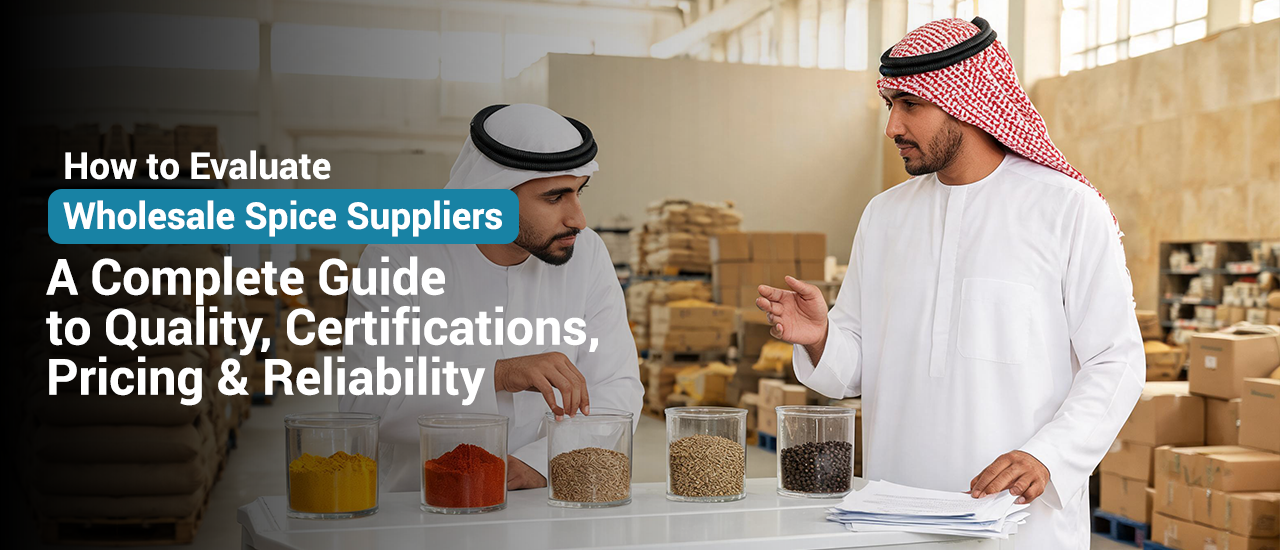
Third, request physical samples before committing to a bulk order. Reputable wholesale spices suppliers will happily provide samples so you can test aroma, color, moisture, and taste against your own quality benchmarks. If a supplier hesitates to provide samples or lab test reports, treat that as a warning sign rather than a minor inconvenience.
A few practical quality checkpoints worth building into your evaluation process include:
- Visual inspection for color uniformity, foreign matter, and signs of adulteration
- Aroma and oil content testing, especially for high-value spices like cardamom, cloves, and black pepper
- Moisture content verification to prevent spoilage during transit and storage
- Batch-to-batch consistency checks across multiple shipments, not just the first order
2. Verify Certifications and Compliance Documentation
Certifications are not just paperwork; they are proof that a supplier’s processes meet internationally recognized food safety and quality benchmarks. When evaluating a wholesale spices supplier, ask directly which certifications they hold and request copies of current, valid documentation rather than relying on claims made on a website or sales call.
Some of the most relevant certifications and compliance documents to look for include:
- Food safety management certifications such as HACCP or ISO 22000, which confirm that hazard analysis and quality control systems are in place throughout production
- Organic certification, if you are sourcing organic spices for a clean-label product line
- Phytosanitary certificates and certificates of origin, which are essential for customs clearance in international trade
- Laboratory test reports covering pesticide residue, heavy metals, and microbial contamination, particularly important for spices entering regulated markets like the EU, US, or GCC countries
A supplier who exports internationally and serves wholesalers, retailers, and food manufacturers across multiple regions, as Apex Star Trading does across the Middle East, Asia, Africa, and Europe, typically maintains a more rigorous documentation process simply because international buyers demand it. This is a useful signal: suppliers with an established export track record across diverse regulatory environments tend to have more disciplined compliance systems than those selling only in a single local market.
It’s also worth asking how a supplier handles product recalls or quality disputes. A transparent answer, backed by documented procedures, tells you far more about their reliability than any marketing claim.
3. Understand Pricing Without Sacrificing Value
Pricing is often the first thing buyers compare, but it should never be the only factor. Wholesale spices pricing can vary significantly based on origin, grade, seasonality, currency fluctuations, and order volume, and a price that looks unusually low compared to market rates is frequently a sign of compromised quality, incorrect labeling, or hidden costs further down the line.
When comparing quotes from different wholesale spices suppliers, it helps to break pricing down into its actual components rather than looking at a single bulk figure. Consider the following:
- Base product cost relative to current market benchmarks for that specific spice and grade
- Packaging costs, especially if you require custom bulk packaging or private labeling
- Logistics and freight charges, which can shift significantly depending on shipping method and destination port
- Payment terms and minimum order quantities, which affect your working capital and cash flow planning
- Any additional charges for documentation, inspection, or expedited processing
A supplier offering competitive, transparent pricing without unexplained add-ons is generally a stronger long-term partner than one offering the lowest headline price. Businesses that have worked with established wholesale spices exporters like Apex Star Trading often highlight that consistent quality at a fair, explainable price delivers better value over time than chasing the cheapest quote on every order. Cost-effective bulk supply should never come at the expense of product consistency or packaging standards, since the downstream costs of rejected shipments, customer complaints, or regulatory issues almost always outweigh the initial savings.
It is also worth discussing pricing flexibility for growing businesses. As demand for private labeling and customized seasoning blends continues to rise, a supplier who can offer tiered pricing structures based on order volume, or flexible terms for businesses scaling their spice sourcing, gives you more room to grow without renegotiating your entire supply chain each time your order size changes.
4. Assess Reliability and Supply Chain Consistency
Even the highest-quality wholesale spices are only useful if they arrive on time, in the right condition, and in the right quantity. Reliability is where many supplier relationships break down, particularly when businesses scale up their order volumes or expand into new markets.
To evaluate reliability properly, look beyond a supplier’s promises and examine their operational track record. Key questions to ask include how long the company has been operating in the wholesale spices trade, how they manage logistics across different regions, and what contingency plans they have for disruptions like port delays, currency volatility, or crop shortages in a given growing season.
Longevity in the industry is a meaningful indicator here. A company with decades of experience, such as Apex Star Trading, which has been sourcing, trading, and exporting premium spices, seeds, and dried fruits for over thirty years, has typically weathered multiple market cycles, built strong relationships with growers, and developed the operational discipline needed to maintain supply continuity even during challenging periods. This kind of experience translates directly into fewer disruptions for your business.
Reliability also shows up in smaller, everyday details:
- How quickly does the supplier respond to inquiries and order changes
- Do they provide clear, proactive communication about shipment status and potential delays
- Is their documentation accurate and delivered on time to avoid customs bottlenecks
- Do they maintain sufficient inventory and sourcing flexibility to handle demand spikes
Businesses that prioritize transparent documentation and responsive service over short-term transactional deals tend to build the kind of long-term partnerships that protect your supply chain during volatile market conditions. This is increasingly important as global demand for wholesale spices continues to rise alongside growing interest in organic products, value-added blends, and private label seasoning lines.
5. Evaluate the Range and Flexibility of Product Offerings
A supplier’s product range often reflects the depth of their sourcing network. Wholesale spices buyers frequently need more than a single commodity; they need turmeric, cumin, coriander, black pepper, cardamom, cloves, star anise, and specialty items like senna leaves or tamarind, often from multiple origin countries to match different flavor profiles and price points.
A supplier with a broad and well-documented catalog, offering everything from whole spices to ground powders and custom blends, gives you the flexibility to consolidate your sourcing with a single trusted partner rather than managing relationships with multiple vendors. This not only simplifies your procurement process but also strengthens your negotiating position as your order volumes grow. Suppliers like Apex Star Trading, which offer an extensive range spanning spices, seeds, and dried fruits alongside private labeling and customized blending options, are particularly well positioned to support businesses that want to consolidate their bulk ingredient sourcing under one reliable roof.
6. Look for Signs of Genuine Customer Partnership
Finally, pay attention to how a supplier treats the relationship itself. Wholesale spices sourcing works best as an ongoing partnership rather than a series of one-off transactions. Suppliers who invest in understanding your business needs, offer guidance on market trends, and remain accessible after the sale, not just during it, tend to deliver more consistent value over time.
Client testimonials and repeat business are strong indicators here. If a supplier is regularly praised for making bulk sourcing effortless and for the reliability of their export services, that reputation is usually earned through years of consistent delivery rather than a single successful transaction.
Final Thoughts: Choosing a Wholesale Spices Partner You Can Trust
Evaluating wholesale spices suppliers requires looking past the surface-level appeal of a low quote and examining the full picture: verified quality processes, valid certifications, transparent and fair pricing, and a proven track record of reliability. The businesses that get this right protect their supply chain, their compliance standing, and ultimately their brand reputation with every order they place.
Companies with decades of hands-on experience in global sourcing, robust processing facilities, and a genuine commitment to customer partnership, such as Apex Star Trading, illustrate what a dependable wholesale spices supplier should look like in practice. As demand for premium, traceable, and sustainably sourced spices continues to grow across international markets, taking the time to properly evaluate your suppliers today will pay off in consistency, compliance, and confidence for years to come.