Raisins are among the most widely traded dried fruits in the world. They appear in breakfast cereals, bakery products, trail mixes, sweets, sauces, and traditional dishes across many cultures. Their natural sweetness, long shelf life, and nutritional value make them a dependable ingredient for businesses of every size. Yet the quality of raisins varies a great deal from one batch to another. Differences in grape variety, drying method, grading, cleaning, and storage all affect the final product. That is why finding a dependable raisins supplier matters so much for any buyer.
A good supplier does more than deliver a sack of dried grapes. They provide consistent quality, honest communication, safe packaging, and reliable delivery schedules. At Apex Star Trading, we approach dry fruit trading with these priorities in mind. This guide shares practical, experience-based knowledge about raisins, from how they are made to how to evaluate a raisins supplier. Whether you are a wholesaler, retailer, restaurant owner, or food manufacturer, you will find information here that helps you make a confident purchasing decision.
What Are Raisins and How Are They Produced?
Raisins are dried grapes. They are produced mainly from seedless or small-seeded grape varieties that have a high sugar content and thin skin. Once the grapes reach the right level of ripeness, they are harvested and dried. The drying stage is the most important part of the process because it determines the colour, texture, flavour, and shelf life of the raisin.
There are two broad drying methods. Sun drying is the traditional approach, in which grapes are spread on trays or mats and left under natural sunlight for several days. This produces darker, chewier raisins with a rich flavour. Shade or mechanical drying uses controlled airflow or heat and often results in lighter, more evenly coloured raisins. Some producers use a mild pre-treatment to speed up drying or preserve colour, which is why buyers should always ask about processing details.
After drying, raisins go through cleaning, stem removal, sorting, and grading. Good processors remove stems, damaged fruit, sand, and foreign matter, then sort the raisins by size and colour. A trustworthy raisins supplier understands this chain and can explain each stage to customers. Experience in handling these products also helps in recognising early signs of poor quality, such as excess stickiness, crystallised sugar, or an off smell.
Popular Types of Raisins Available in the Market
Raisins come in several varieties, and each suits different needs. Knowing the differences helps you select the right product for your customers or recipes.
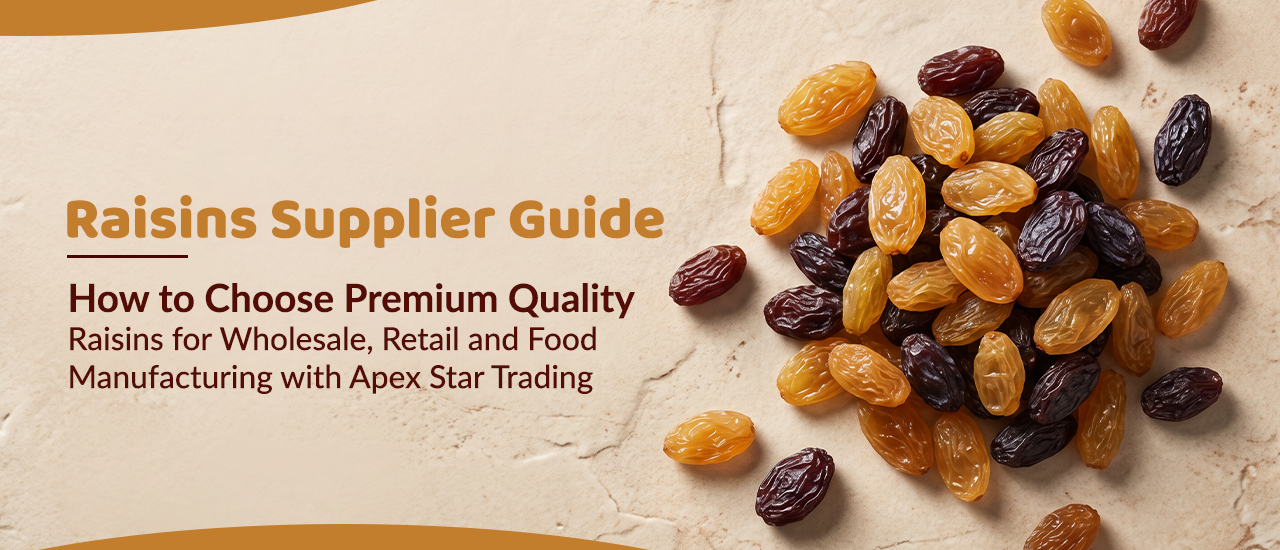
Green raisins are among the most popular in bulk trade. They are made from green seedless grapes and are known for their light green to golden colour and a pleasantly sweet, slightly tangy taste. They are commonly used in packaged snacks, desserts, and gift boxes.
Golden raisins are usually lighter in colour and slightly softer. They are often used in baking, salads, and rice dishes because their mild flavour blends well with other ingredients.
Black raisins are darker and richer in taste. They are common in traditional sweets, cakes, and festive dishes, and many consumers prefer them for their deeper sweetness.
Seeded and specialty raisins, including larger sizes, are favoured by customers who want a particular texture or a traditional flavour profile.
Some of the main points to compare across varieties include:
- Colour and appearance, which matter for retail display and visual appeal
- Size and uniformity, which affect grading and pricing
- Moisture level, which influences softness and shelf life
- Flavour profile, which determines the best culinary use
A knowledgeable raisins supplier will help you match the variety to your end use rather than simply selling whatever is in stock.
Health Benefits of Raisins
Raisins are valued not only for taste but also for nutrition. Because the water has been removed, the natural nutrients in grapes become concentrated. This makes raisins an energy-dense food that can fit into a balanced diet when eaten in sensible portions.
They contain natural sugars such as glucose and fructose, which provide quick energy. This is why raisins are popular among athletes, travellers, and students as a convenient snack. They also contain dietary fibre, which supports healthy digestion and helps maintain regular bowel movements.
Raisins also provide minerals such as potassium, iron, and small amounts of calcium and magnesium. Potassium supports normal muscle and nerve function, while iron contributes to healthy blood. In addition, raisins contain plant compounds, including antioxidants, which are associated with general wellness in nutrition research.
It is worth remembering that raisins are concentrated in sugar and calories, so portion size matters, especially for people managing blood sugar or weight. Anyone with a medical condition should consult a qualified healthcare professional about their diet. For food businesses, being honest about these facts builds credibility with customers, and a responsible raisins supplier will always provide accurate product information instead of exaggerated health claims.
Common Uses of Raisins in Food and Industry
The versatility of raisins is one reason demand stays strong throughout the year. Different sectors use them in different ways.
In the bakery industry, raisins are added to breads, buns, cookies, muffins, and cakes. They keep moisture inside baked goods and add natural sweetness, which can reduce the need for extra sugar in some recipes.
In confectionery and snack manufacturing, raisins are mixed with nuts, seeds, and other dried fruits to create trail mixes, granola bars, and chocolate-coated treats. Their chewy texture contrasts well with crunchy ingredients.
In breakfast products, raisins are a standard ingredient in muesli, porridge, and cereal blends.
In home and restaurant cooking, they are used in rice dishes, curries, desserts, puddings, and sauces. Many traditional recipes use raisins for sweetness and texture.
In gifting and festive markets, premium raisins are packed in attractive boxes and combined with other dry fruits for celebrations and special occasions.
Because each use has its own quality requirements, buyers benefit from working with a raisins supplier that offers different grades and packaging sizes. A bakery needs soft, plump raisins with consistent moisture, while a retail brand may prioritise colour and uniform size.
How to Evaluate a Raisins Supplier Before You Buy
Choosing the right partner is a business decision that affects your product quality, your customer satisfaction, and your reputation. Based on practical trade experience, these are the key factors to check before placing an order.
First, look at product quality and consistency. Ask for samples and inspect them for colour, size, moisture, cleanliness, and aroma. A single good sample is not enough, so ask how the supplier maintains the same standard from batch to batch.
Second, check transparency. A trustworthy raisins supplier is willing to answer questions about sourcing, processing, grading, and storage. If a company avoids simple questions, treat that as a warning sign.
Third, review food safety practices. Reliable suppliers follow hygienic handling procedures and can explain how they prevent contamination, pests, and moisture damage. Depending on your market, you may also need documentation related to quality checks or export requirements.
Fourth, consider packaging and storage. Raisins absorb moisture and odours easily, so proper packaging is essential. Look for clean, sealed, food-grade packing that protects the product during transport.
Fifth, examine communication and delivery. Clear pricing, realistic timelines, and responsive support make long-term trading far smoother.
When you compare any raisins supplier against these five points, you protect your business from avoidable risks such as spoiled stock, delayed shipments, and unhappy customers.
Why Choose Apex Star Trading as Your Raisins Supplier
Apex Star Trading focuses on supplying quality dry fruits to customers who value reliability and clear communication. Our approach is built around the same principles that we recommend buyers look for in any partner: quality, transparency, and consistency.
Our experience in the dry fruit trade has taught us that long-term relationships matter more than one-time sales. We therefore take time to understand what each customer needs, whether that is a particular variety, grade, or packaging style. As a raisins supplier, Apex Star Trading aims to match the product to the purpose, so that a baker, a retailer, and a manufacturer each receive what suits their requirements.
Here is what customers can expect when they work with us:
- Careful selection of raisins based on colour, size, and cleanliness
- A range of varieties and grades to suit different applications
- Hygienic handling and protective packaging
- Honest information about the product, with no inflated claims
- Responsive support from enquiry to delivery
We believe that trust is earned through consistent action. That means providing samples when appropriate, being upfront about availability and timelines, and addressing concerns quickly if something does not meet expectations. For buyers who want a dependable partner rather than a one-time seller, Apex Star Trading offers a straightforward and professional working relationship.
Quality Standards, Packaging and Storage
Quality does not end at purchase. How raisins are packed, stored, and transported has a direct effect on what the customer eventually receives. Poor storage can lead to hardening, sugar crystallisation, mould, or pest infestation.
Good practice starts with cleaning and grading, followed by packing in food-grade materials that limit exposure to air and moisture. Cartons, bags, and bulk packs should be sealed properly and labelled clearly. During transport, raisins should be kept away from heat, humidity, and strong odours.
Storage guidance is equally important for buyers. Raisins keep best in a cool, dry, well-ventilated place away from direct sunlight. Once a pack is opened, it should be resealed tightly or moved to an airtight container. In warm or humid climates, cooler storage can help maintain freshness for longer.
A professional raisins supplier will explain these practices clearly and may offer different pack sizes to suit retail shelves, restaurant kitchens, or industrial production lines. At Apex Star Trading, we treat packaging and storage guidance as part of the service, because protecting product quality protects our customers’ businesses too.
Buying Raisins in Bulk: Practical Tips for Wholesale Buyers
Bulk purchasing can improve your margins, but it also raises the stakes. A poor-quality bulk order is costly, so preparation is important.
Begin by defining your requirements: variety, grade, quantity, packaging, and delivery timeline. The clearer your brief, the easier it is for a supplier to offer a suitable solution. Request samples and test them in your own recipes or on your shelves before committing to a large order.
Next, plan your inventory. Dried fruit has a good shelf life, but it is not unlimited. Ordering in sensible quantities that match your sales cycle reduces waste. If your demand rises during festivals or seasonal peaks, discuss this early so your supplier can prepare.
Also compare total value rather than price alone. The cheapest offer may include more broken fruit, stems, or moisture, which lowers usable yield. A dependable raisins supplier will be honest about what a price includes and will help you balance cost with quality.
Finally, keep records of each delivery and note any quality observations. Clear feedback helps your supplier maintain standards and makes future orders smoother. Apex Star Trading welcomes this kind of open communication, as it helps us serve repeat customers better.
Frequently Asked Questions About Buying Raisins
How can I tell if raisins are fresh?
Fresh raisins are plump and slightly soft, with a natural fruity smell. Avoid raisins that are rock hard, overly sticky, covered in white crystals, or smell sour or musty.
Are all raisins the same?
No. Variety, drying method, and grading create real differences in taste, colour, and texture, so choose according to your intended use.
How long do raisins last?
When stored properly in a cool, dry place and sealed well, raisins can stay in good condition for many months. Exact shelf life depends on moisture content, packaging, and storage conditions.
Should I ask for a sample first?
Yes. Reviewing a sample is a sensible step for any buyer and a normal part of professional trading.
Conclusion
Raisins may look like a simple product, but delivering consistent quality requires knowledge, care, and attention at every stage, from drying and grading to packaging and delivery. For buyers, the supplier they choose has a direct effect on product quality, customer satisfaction, and long-term profitability. By checking quality, transparency, food safety practices, packaging, and communication, you can reduce risk and build a dependable supply chain.
Apex Star Trading is committed to supporting buyers with carefully selected raisins, honest guidance, and professional service. If you are searching for a raisins supplier that values trust and consistency, we invite you to get in touch, discuss your requirements, and request details about available varieties and packaging options. A strong supplier relationship is built on clear expectations and reliable performance, and that is exactly what we aim to deliver with every order.