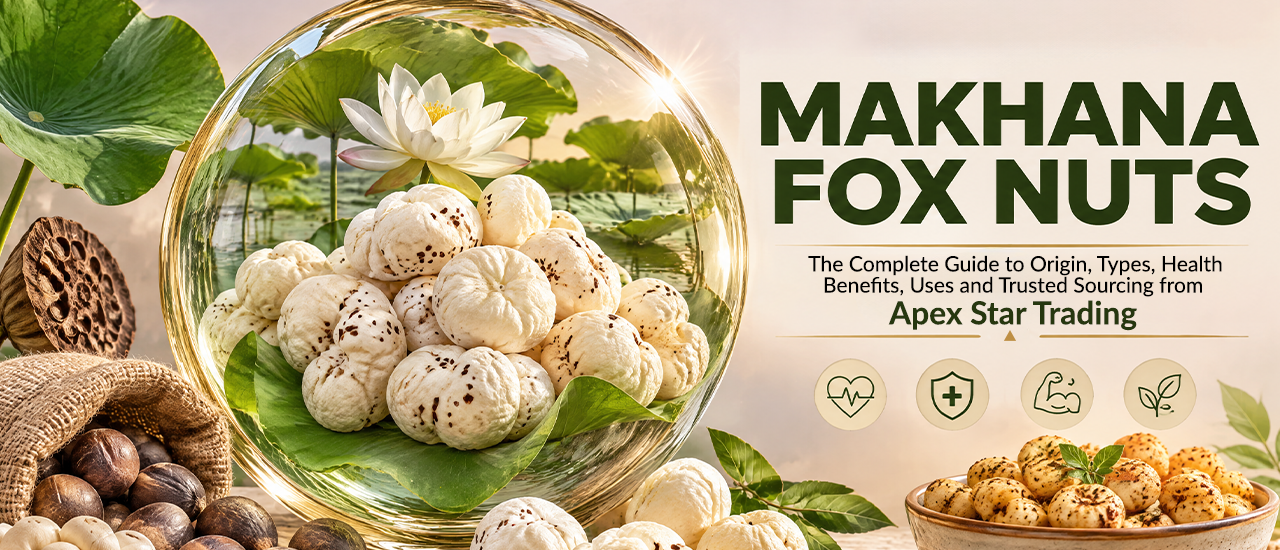
Few foods have moved from humble village kitchens to global health-food shelves as quickly as makhana. Light, crunchy and naturally nutritious, makhana fox nuts are now a favourite among nutritionists, home cooks and food businesses alike. Known in English as fox nuts or lotus seeds, these puffed kernels come from the seeds of the prickly water lily, Euryale ferox, which grows in still, shallow ponds.
This guide explains where makhana fox nuts come from, how they are grown and processed, what types are available, and why they deserve a place in a balanced diet. It also explains what buyers should look for when purchasing in bulk and how Apex Star Trading helps customers source dependable products. Whether you are a health-conscious consumer, a restaurateur or an importer, this article gives you practical, trustworthy information.
History and Origin of Makhana
Makhana has been part of South Asian life for thousands of years. Traditional texts and folk practice link it with fasting rituals, religious offerings and Ayurvedic diets, where it was valued as a light but nourishing food. The plant is also known in parts of East Asia, where its seeds were used in traditional cooking and herbal preparations.
In India, the Mithilanchal region of Bihar, including districts such as Darbhanga, Madhubani and Purnia, is widely recognised as the heartland of production, and the region’s makhana received a Geographical Indication (GI) tag in recent years. Its stagnant, nutrient-rich ponds suit the crop well. Harvesting remains largely manual and is one of the most labour-intensive agricultural traditions in the country. Divers bring up the dark, round seeds from the muddy pond bed, and the seeds are then cleaned, sun-dried, graded and roasted.
This craftsmanship is why makhana fox nuts are valued not only as food but also as a product of skilled community knowledge passed down across generations. Companies like Apex Star Trading build on that heritage by connecting traditional production regions with modern buyers.
From Pond to Pack: How Fox Nuts Are Made
Understanding the process helps you judge quality. After harvest, the seeds are washed and dried in the sun. They are then graded by size and heated in a pan or roaster. When the hard black shell is struck gently, it cracks open and the white kernel pops out, similar to popcorn but far lighter. The popped kernels are sorted again by size, colour and shape before packing.
Because so much depends on careful handling, quality varies widely between suppliers. Moisture, over-roasting, broken pieces and poor storage can all spoil the final product. A reliable trading partner such as Apex Star Trading pays attention to each of these stages so that customers receive consistent, clean and well-packed makhana fox nuts.
Types and Grades of Makhana Fox Nuts
Not all makhana is the same. Buyers usually distinguish products by size, colour and processing style. The main categories are:
- Size grades: Kernels are commonly sorted into sizes such as 3 suta, 4 suta, 5 suta, 6 suta and larger, where a higher number generally means a bigger, more premium kernel.
- Colour and finish: Premium kernels are bright white and evenly puffed, while lower grades may be slightly off-white, uneven or broken.
- Plain and flavoured: Plain roasted kernels suit cooking and recipes, while flavoured varieties, such as peri-peri, cheese or salted, are made for ready-to-eat snacking.
Larger grades are preferred for gifting, premium retail and restaurant use because of their uniform appearance and satisfying crunch. Smaller and broken pieces work well in powders, flour, puddings and processed foods, where appearance matters less. Choosing the right grade for your purpose saves money without sacrificing quality, and the team at Apex Star Trading can guide buyers toward the grade that fits their needs.
Nutritional Profile and Health Benefits
One of the biggest reasons for the popularity of makhana fox nuts is their nutritional profile. They are low in fat and calories, free from gluten, and provide plant-based protein, complex carbohydrates, and minerals such as magnesium, potassium, phosphorus and calcium. They also contain antioxidants, including flavonoids, which are being studied for their role in protecting cells.
Here is what this means in everyday terms.
Supports weight management. Because makhana is light, filling and low in calories, a bowl of roasted kernels can satisfy hunger between meals without the heavy fat load of many packaged snacks. Replacing fried snacks with makhana fox nuts is a simple swap that many people find easy to maintain.
Good for heart health. The potassium and magnesium found in fox nuts support normal blood pressure and muscle function, and the very low sodium content (when eaten plain) makes them suitable for heart-conscious diets.
Gentle on digestion and blood sugar. Makhana has a low glycaemic impact compared with refined snacks, and its fibre content supports digestion. People managing diabetes often include it in their diet, though portions and individual medical advice still matter.
Suitable for many diets. Being gluten-free, vegan and easy to digest, makhana fits a wide range of dietary preferences, from fasting traditions to modern plant-based eating.
These benefits are well recognised in nutrition literature and traditional practice, but fox nuts are a food, not a medicine. Anyone with a medical condition, allergy or special dietary need should consult a qualified doctor or dietitian before making major changes to their diet.
Popular Uses of Makhana Fox Nuts
The versatility of makhana fox nuts is a major reason for their growing demand across households and food businesses.
Healthy snacking. The simplest use is to dry roast the kernels with a little ghee or olive oil, then season with salt, pepper or spices. They stay crisp for days when stored in an airtight container.
Traditional Indian cooking. Makhana is a staple in kheer, a creamy milk-based dessert often prepared during festivals and fasting days. It also appears in curries, where the kernels absorb flavours and add a soft, spongy texture, and in raita and chaat.
Fasting foods. Because makhana is considered suitable for many religious fasts, demand rises sharply during festival seasons, which is something suppliers like Apex Star Trading plan for in advance.
Baby and elder nutrition. Ground makhana powder is sometimes mixed into porridge for its soft texture and gentle digestibility. Parents should always check with a paediatrician before introducing new foods to infants.
Food manufacturing. Snack brands, bakeries and health-food companies use makhana fox nuts in trail mixes, protein bars, granola, coated snacks and ready-to-eat mixes.
Gifting and hospitality. Premium, large-grade kernels are widely used in gift hampers and corporate gifting, as well as in hotels and catering services.
How to Choose Good Quality Makhana
Whether you buy a small pack or a bulk consignment, a few simple checks will help you avoid disappointment. Look for kernels that are white, round and evenly puffed. Avoid packs with many broken pieces, dark spots or a stale smell. A fresh batch should snap crisply rather than bend. Check that the packaging is sealed and moisture-proof, and ask about the grade, origin and shelf life. For commercial buyers, request samples before placing large orders, and confirm the supplier can deliver consistent quality over time.
Why Choose Apex Star Trading?
Choosing a supplier is as important as choosing the product. Apex Star Trading is positioned as a trading company that understands both the product and the people who buy it. Here is what customers can expect when they work with a dedicated partner of this kind:
- Careful sourcing: Products are selected with attention to grade, freshness and cleanliness, so buyers receive makhana fox nuts that match what they ordered.
- Range of options: Different sizes and grades are available for retail, wholesale, export and food-processing needs.
- Transparent communication: Clear information on grades, packaging and delivery helps buyers plan with confidence.
- Reliable service: Consistent supply and professional handling are essential for businesses that depend on regular stock.
When you buy from Apex Star Trading, you are choosing a team that treats makhana fox nuts as a quality product rather than a commodity. For the latest product range, specifications and enquiries, we recommend visiting the Apex Star Trading website or contacting the team directly.
Storage Tips for Lasting Freshness
Makhana absorbs moisture easily, so store it in a clean, dry, airtight container away from humidity and direct sunlight. If the kernels soften, a few minutes of dry roasting on a low flame restores the crunch. Stored properly, good quality makhana fox nuts stay fresh for several months.
Conclusion
From the ponds of Bihar to kitchens and factories around the world, makhana fox nuts have earned their reputation as a light, nutritious and versatile food. Their rich heritage, impressive nutritional profile and wide range of uses make them a smart addition to modern diets, and their value extends from the family snack bowl to commercial food production.
Choosing the right grade and the right supplier makes all the difference. With a focus on quality, clarity and customer service, Apex Star Trading aims to make that choice easier for every buyer. If you are ready to explore premium makhana fox nuts for your home, store or business, reach out to Apex Star Trading and experience the difference that careful sourcing makes.