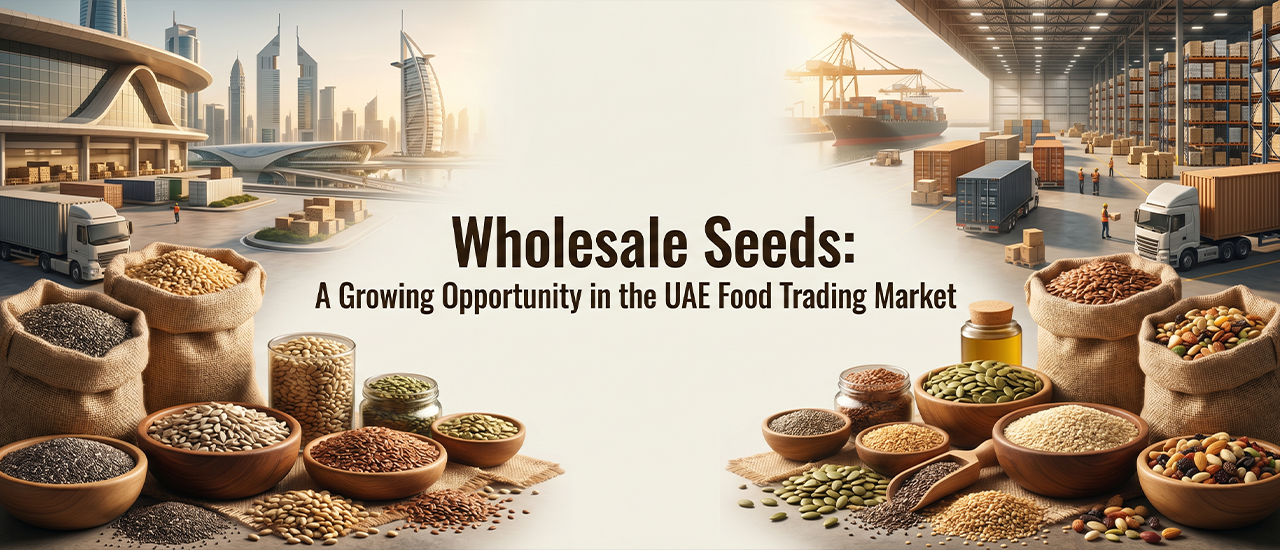
The UAE has long cemented its status as a crossroads of global commerce. From electronics to luxury goods, Dubai’s trade arteries move billions of dollars’ worth of products every year. But one of the most quietly explosive categories in that flow is agricultural commodities — particularly wholesale seeds.
Across food manufacturing facilities, supermarket procurement departments, HORECA supply chains, and distribution warehouses, the conversation around bulk seeds has evolved. Demand is no longer driven solely by traditional culinary uses. Health-conscious consumers, plant-based food trends, functional ingredient sourcing, and the rise of artisan and specialty foods have collectively pushed edible seeds into a new league.
For importers, wholesalers, and food businesses operating in the UAE, this signals a clear opportunity: partnering with a reliable bulk seed supplier that can deliver consistent quality, competitive pricing, and seamless logistics is no longer optional — it’s a strategic advantage.
The Seed Market at a Glance: What’s Being Traded and Why
Global seed trading is a multi-billion-dollar industry, and the variety of edible seeds in circulation reflects how diverse end-user demand has become. Here’s a breakdown of the seeds most actively traded in international wholesale markets:
Sesame Seeds
One of the oldest cultivated oilseeds in the world, sesame remains a cornerstone of agricultural commodity trading. White and black sesame varieties are in high demand across the Middle East, Asia, and Africa for use in tahini, bakery products, confectionery, and cooking oils. The UAE serves as a major re-export hub for sesame sourced from Ethiopia, Sudan, India, and Myanmar.
Sunflower Seeds
Available in both hulled and dehulled forms, sunflower seeds are a staple for snack manufacturers, bakers, and health food brands. Global demand has surged alongside the growth of trail mixes, plant-based diets, and sunflower oil production.
Chia Seeds
Once considered a niche health food, chia seeds have become a mainstream functional ingredient. Rich in omega-3 fatty acids, fiber, and protein, they are highly valued by food manufacturers producing beverages, yogurts, health bars, and ready-to-eat meals. Bolivia, Mexico, and Argentina remain key sourcing origins for global seed suppliers.
Flax Seeds
Flax seeds (linseed) are valued for both their nutritional profile and industrial applications in oil extraction. In the food sector, they are increasingly incorporated into bread, cereals, protein powders, and vegan products.
Pumpkin Seeds
Pepitas — hulled pumpkin seeds — command premium pricing due to their rich zinc, magnesium, and healthy fat content. They are a popular ingredient in gourmet snack lines, salads, and functional food products.
Watermelon Seeds
A high-protein seed growing rapidly in popularity across African, Asian, and Middle Eastern markets. Roasted watermelon seeds are a traditional snack in many cultures, and their protein profile is drawing increasing attention from food manufacturers exploring alternative protein sources.
Quality Standards, Sourcing, and the Role of the Supply Chain
In B2B seed trading, the quality of the product that reaches the end buyer is only as strong as every link in the supply chain.
Key quality benchmarks for wholesale agricultural products include:
- Moisture content: Seeds must be dried to safe storage levels to prevent mold, aflatoxin contamination, and spoilage during transit.
- Purity percentage: High-grade wholesale seeds are typically graded at 99%+ purity, meaning minimal foreign matter, broken kernels, or off-type seeds.
- Sortex processing: Color sorting and electronic sorting remove discolored, damaged, or contaminated seeds at the source.
- Food safety certifications: Reputable suppliers carry ISO 22000, HACCP, or equivalent certifications. For EU or US exports, FDA compliance and EU phytosanitary standards are essential.
- Packaging integrity: Proper multi-layer or vacuum packaging protects seeds from humidity, light, and pest contamination during storage and transportation by sea or air freight.
Working with an established seed importer in the UAE that maintains traceability from farm to final delivery reduces risk for downstream buyers and supports food safety compliance requirements.
The UAE as a Global Food Trading Hub
There is a reason so much of the world’s agricultural commodity trading passes through Dubai. The UAE offers an unparalleled combination of logistical, regulatory, and commercial advantages:
- Strategic geographic positioning between Asia, Africa, and Europe — with Jebel Ali Port being one of the largest container terminals in the world.
- Minimal import tariffs and a business-friendly regulatory environment that accelerates customs clearance.
- World-class cold chain and dry warehousing infrastructure across Jebel Ali Free Zone (JAFZA), Dubai Industrial City, and Abu Dhabi’s food logistics parks.
- A large re-export market that allows Dubai-based food trading companies to efficiently serve markets across the GCC, East Africa, South Asia, and the Levant.
For international seed producers and global buyers alike, working with a food trading company in Dubai means faster lead times, better freight consolidation, and access to one of the world’s most connected trade corridors.
How Wholesale Seed Trading Benefits Different Business Types
Wholesale seed trading is not a one-size-fits-all proposition. The value it delivers depends on the buyer’s position in the supply chain:
Importers and Distributors
Access to pre-vetted, documentation-complete bulk shipments reduces risk and customs complexity. Established supplier relationships also provide priority allocation during supply shortages.
Food Manufacturers
Consistent quality and specification-matched supply are critical for uninterrupted production. Bulk food ingredients sourced through a reliable trading partner reduce per-unit raw material costs and streamline procurement.
Supermarkets and Retail Chains
Private-label seed products and retail-ready packaging options allow supermarkets to offer differentiated SKUs without maintaining direct importer relationships.
HORECA Businesses
Hotels, restaurants, and catering companies sourcing seeds in bulk benefit from wholesale pricing without the complexity of direct international procurement.
Market Trends, Global Demand, and Pricing Factors
Several macroeconomic and consumer-driven factors are shaping wholesale seeds markets in 2024 and beyond:
- The plant-based protein movement — Seeds are increasingly positioned as functional protein and omega-3 sources, driving demand from health food manufacturers worldwide.
- Mainstream adoption of superfoods — Chia, flax, and hemp seeds have expanded from specialty health stores into major retail chains globally.
- Sustainability sourcing pressures — Buyers increasingly demand transparency regarding farming practices, carbon footprints, and fair-trade certifications.
- Climate variability — Droughts and irregular rainfall in major producing countries create seasonal supply challenges, making long-term supplier relationships more valuable.
- Currency and freight fluctuations — Agricultural commodity prices are influenced by USD exchange rates, freight congestion, and fuel costs — factors that experienced B2B seed trading partners help buyers navigate effectively.
Practical Tips: Choosing a Reliable Wholesale Seeds Supplier
Not every supplier offering bulk seeds delivers the same level of value. When evaluating potential partners, B2B buyers should prioritize the following:
- Documented quality control processes — Request certificates of analysis (COA), food safety certifications, and recent laboratory reports.
- Origin transparency — Know exactly where the seeds are sourced and whether the supplier works directly with growers or relies on intermediaries.
- Flexible MOQs — The ideal bulk seed supplier should accommodate both full-container volumes and smaller trial orders.
- Logistics capability — Can the supplier manage FCL shipments, LCL consolidations, and multimodal routing to your destination?
- After-sales support — Responsive account management, documentation assistance, and clear dispute resolution processes are essential for long-term trading relationships.
- Compliance support — A knowledgeable edible seed supplier can assist buyers in meeting import documentation requirements in their target markets.
How Apex Star Trading Supports Bulk Seed Buyers
Apex Star Trading is a Dubai-based food trading company with deep expertise in wholesale agricultural products, specializing in high-quality edible seeds for B2B buyers across the UAE, GCC, and international markets.
What Sets Apex Star Trading Apart
- Global Sourcing Network: Direct sourcing relationships with premium seed producers across Africa, Asia, and South America ensure competitive farm-gate pricing and consistent supply.
- Stringent Quality Assurance: Every shipment undergoes rigorous quality checks, including moisture testing, purity grading, and allergen screening before dispatch.
- Competitive Bulk Pricing: Apex Star Trading’s procurement scale allows favorable pricing to be passed directly to wholesale buyers, distributors, and manufacturers.
- Custom Packaging Solutions: From 25kg jute or PP bags to retail-ready vacuum packaging, solutions are tailored to meet specific distribution requirements.
- Reliable Logistics: Leveraging Jebel Ali-based operations, the company coordinates efficient sea and air freight to destinations across the Middle East, Africa, Europe, and Asia.
- Full Documentation Support: Phytosanitary certificates, certificates of origin, and food safety compliance documents are managed end-to-end.
Conclusion
The wholesale seeds market in the UAE is not only growing — it is evolving. Emerging consumer trends, expanding food manufacturing sectors, and the UAE’s unmatched position as a global trading hub are creating conditions where quality, reliability, and supply chain intelligence make all the difference.
Whether you are a distributor expanding your product range, a food manufacturer securing raw material supply, or a retail chain building a private-label category, wholesale seed trading presents meaningful commercial opportunities — provided you work with the right partner.
Apex Star Trading combines premium-quality seeds, competitive bulk pricing, global sourcing expertise, and reliable logistics capabilities to support businesses across international markets.
Ready to explore bulk seed supply solutions? Contact Apex Star Trading today and let our team create a procurement proposal tailored to your volume, quality, and delivery requirements. Your supply chain deserves a partner that delivers performance and reliability.
Frequently Asked Questions (FAQ)
Q1: What types of wholesale seeds does Apex Star Trading supply?
We supply a comprehensive range, including sesame seeds, sunflower seeds, chia seeds, flax seeds, pumpkin seeds, watermelon seeds, and other bulk edible seeds based on buyer requirements.
Q2: What is the minimum order quantity (MOQ) for bulk seeds?
MOQs vary depending on the product and packaging format. We accommodate both FCL container orders and smaller LCL shipments for new buyers. Contact our sales team for current MOQ details.
Q3: What quality certifications does Apex Star Trading maintain?
Our supply chain partners maintain ISO 22000, HACCP, and relevant food safety certifications. We also provide certificates of analysis and phytosanitary certificates with every shipment.
Q4: Can I source private-label packaged seeds through Apex Star Trading?
Yes. We offer custom packaging and private-label solutions for supermarkets, retailers, and distributors looking to launch their own branded seed product lines.
Q5: How does Dubai’s position benefit wholesale seed imports?
The UAE’s logistics infrastructure, re-export advantages, minimal import tariffs, and strategic geographic location make Dubai one of the most cost-effective and efficient gateways for international seed trading.
Q6: What are the main pricing factors for bulk seeds?
Key factors include origin and harvest quality, global supply-demand conditions, currency exchange rates (most seeds are priced in USD), freight costs, and packaging specifications.
Q7: How do I get a quotation from Apex Star Trading?
Simply contact us through our website contact form or email our trading desk with your product requirements, quantity, destination, and preferred packaging. We respond within 24 business hours.