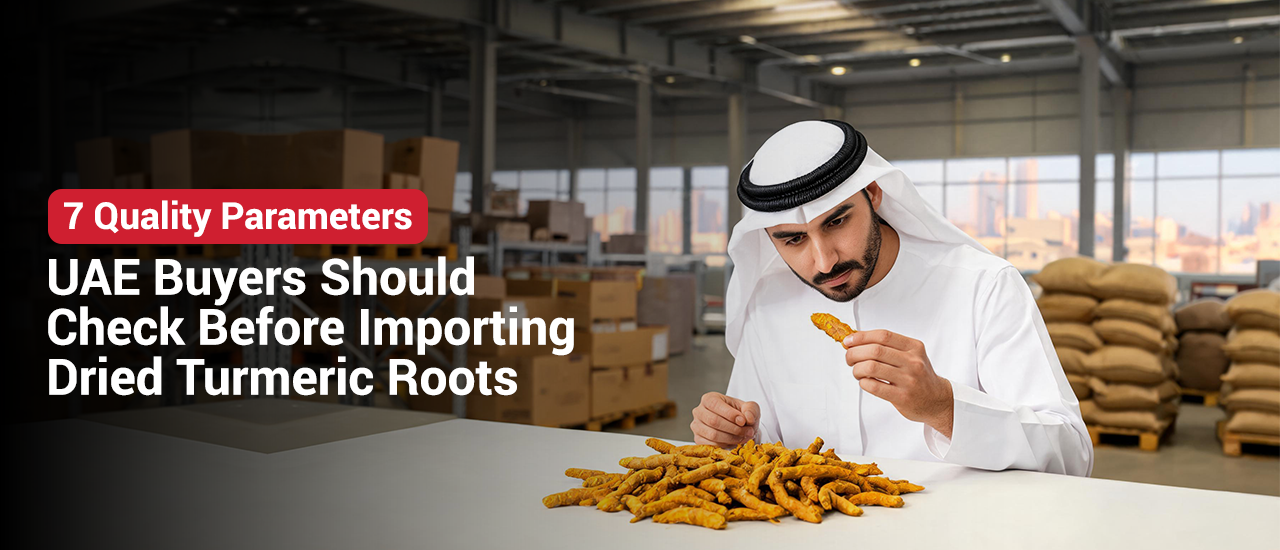
The United Arab Emirates has grown into one of the busiest trading hubs in the world, and spices remain one of the most actively imported commodities passing through its ports. Among these, dried turmeric roots hold a special place. They are used across food processing, pharmaceutical formulation, cosmetic manufacturing, and traditional wellness industries, and demand for this golden rhizome continues to climb every year. However, not every consignment of dried turmeric roots that arrives at UAE ports meets the standards that serious buyers expect. Poor moisture control, contamination, inconsistent color, or hidden microbial issues can turn a promising shipment into a costly liability.
For importers, distributors, and manufacturers operating in the UAE, understanding what separates a premium batch from a substandard one is not optional; it is a business necessity. This is precisely why sourcing from an experienced and transparent supplier matters so much. Companies like Apex Star Trading, which have spent decades working directly with farming networks and export-grade processing units, understand that a buyer’s trust is built on consistent quality, not just competitive pricing. In this guide, we walk through the seven most important quality parameters that every UAE buyer should verify before finalizing an import order of dried turmeric roots.
Why Quality Verification Matters for UAE Importers
Before diving into the specific parameters, it helps to understand why this level of scrutiny is necessary in the first place. The UAE re-exports a significant volume of the spices it imports to other Gulf and African markets, which means that any quality lapse does not just affect the immediate buyer, it can ripple through an entire supply chain. Regulatory bodies in the UAE, including municipality food control departments and the Ministry of Climate Change and Environment, apply strict scrutiny to food-grade imports, and dried turmeric roots are no exception. A shipment that fails inspection due to excess moisture, foreign matter, or microbial contamination can result in delayed clearance, financial loss, and reputational damage for the importer.
This is why working with a supplier that understands both the agricultural and regulatory side of the business, such as Apex Star Trading, gives buyers an added layer of confidence. A reliable exporter does not just sell a product; it provides documentation, traceability, and consistency that make customs clearance and downstream use far smoother. With that context in mind, let’s look at the seven parameters that should be on every buyer’s checklist.
1. Moisture Content
Moisture is arguably the single most important quality indicator for dried turmeric roots, and it is often the first thing that determines whether a shipment will remain stable during the long sea or air transit to the UAE. Turmeric roots that have not been dried to the correct level, generally between 8 and 10 percent moisture for export-grade material, are prone to mold growth, fungal spoilage, and a gradual loss of curcumin content during storage. High humidity levels inside a shipping container, especially over long transit periods through warm climates, can accelerate this deterioration if the initial drying process was not thorough.
Buyers should always request a Certificate of Analysis that specifically states the moisture percentage of the batch, and where possible, should ask for an independent lab test before the goods are loaded. Reputable exporters of dried turmeric roots, including Apex Star Trading, follow controlled sun-drying and mechanical drying processes to bring moisture down to safe, export-compliant levels, ensuring that the product remains stable from the farm gate all the way to the buyer’s warehouse in Dubai, Sharjah, or Abu Dhabi.
A few practical checks buyers can perform on arrival include:
- Pressing a sample root to check for excess softness or dampness
- Checking for condensation inside the packaging bags
- Requesting moisture analyzer readings from the supplier’s quality report
2. Foreign Matter and Impurity Levels
Foreign matter refers to any non-turmeric material present in the consignment, such as stones, soil clumps, plant debris, insect fragments, or fibrous husk remnants left over from harvesting. Export-grade dried turmeric roots should ideally contain less than 1 percent foreign matter by weight, and any batch exceeding this threshold signals inadequate cleaning and sorting during post-harvest processing.
High foreign matter content is not just a cosmetic issue; it directly affects yield for buyers who plan to grind the roots into powder, extract curcumin, or process them for pharmaceutical use. Every kilogram of impurity is a kilogram of usable turmeric that the buyer is not receiving, which makes this parameter a direct commercial concern, not just a quality technicality. Established exporters use mechanical cleaning, sieving, and manual hand-sorting stages to remove impurities before packing, and buyers should always ask their supplier to describe this process in detail. Apex Star Trading, for instance, emphasizes multi-stage cleaning and grading before any batch of dried turmeric roots is approved for export, which is the kind of due diligence UAE buyers should expect from any serious trading partner.
3. Color and Curcumin Indication
The color of dried turmeric roots is a strong visual indicator of both freshness and curcumin content, which is the compound responsible for turmeric’s therapeutic and coloring properties. High-quality roots typically display a deep golden-orange to reddish-brown exterior with a vivid, bright yellow-orange interior when broken or cut. Dull, pale, or grayish coloration often indicates that the roots were harvested too early, dried improperly, stored for too long, or exposed to excessive sunlight and humidity after processing, all of which reduce curcumin concentration.
Since curcumin content directly affects the market value of dried turmeric roots, particularly for buyers in the nutraceutical and pharmaceutical space, color assessment should never be skipped. Many buyers combine visual inspection with a curcumin content test, generally expecting a minimum of 2 to 5 percent depending on the variety and intended use. It is worth noting that turmeric grown in regions like Erode, Salem, and Nizamabad in India is particularly prized for its deep color and higher curcumin levels, and experienced exporters know how to source specifically from these belts. Buyers working with a supplier that has strong farm-level relationships, such as Apex Star Trading, tend to get more consistent color grading batch after batch, since the sourcing itself is tied to known, quality-focused growing regions.
4. Cleanliness and Sorting Standards
Cleanliness goes hand in hand with foreign matter control, but it deserves its own focus because it also covers surface-level cleanliness, uniformity of size, and the removal of damaged or broken pieces. Dried turmeric roots that have not been properly sorted often arrive as an inconsistent mix of whole fingers, broken bulbs, undersized pieces, and dust, which creates handling difficulties for buyers who need a uniform product for retail packaging, powder milling, or extraction processes.
A clean, well-sorted batch reflects a supplier’s investment in proper post-harvest infrastructure, including washing, polishing, and grading lines. Buyers should specifically ask whether the roots have been polished to remove surface soil and whether the batch has been graded into consistent size categories, such as turmeric fingers versus turmeric bulbs. This level of sorting is standard practice among professional exporters, and it is one of the easiest parameters for buyers to verify simply by opening a sample bag and visually inspecting the uniformity of the dried turmeric roots inside.
5. Microbial Quality and Contamination Risk
Microbial safety is a non-negotiable parameter, particularly for dried turmeric roots destined for food, pharmaceutical, or cosmetic applications, all of which have strict hygiene requirements under UAE food safety regulations. Poor drying, unhygienic handling, or improper storage conditions can allow bacteria, yeast, mold, and even pathogens such as Salmonella or E. coli to develop within a batch. This risk becomes even more serious when turmeric is intended for direct human consumption or topical use, where contamination can have real health consequences.
Buyers should always request a microbiological test report covering total plate count, yeast and mold count, and pathogen screening before accepting a shipment. Many international buyers also request steam sterilization or ETO (ethylene oxide) treatment certificates, depending on the destination market’s regulatory requirements, though ETO use is increasingly scrutinized and buyers should clarify which sterilization method their supplier uses. Working with an exporter that maintains hygienic processing facilities and routine lab testing, as is standard practice for established players like Apex Star Trading, significantly reduces the risk of receiving a microbiologically compromised batch of dried turmeric roots.
6. Heavy Metal and Pesticide Residue Levels
Heavy metal contamination, particularly lead, cadmium, arsenic, and mercury, has become an increasingly scrutinized issue in the global turmeric trade following reports of contamination linked to certain processing practices, including the use of lead chromate to artificially enhance color in some markets. UAE buyers, especially those importing for food or pharmaceutical use, must insist on heavy metal test reports that confirm levels fall within internationally accepted limits, typically aligned with Codex Alimentarius or equivalent standards.
Pesticide residue is an equally important consideration, since turmeric is an agricultural crop that may be treated with chemical inputs during cultivation. Buyers should request a pesticide residue analysis report covering commonly used agrochemicals, and where possible, should prioritize suppliers who source from farms following integrated pest management practices or organic cultivation methods. This is one area where sourcing transparency truly separates reliable exporters from opportunistic traders. A supplier with direct farm relationships and documented sourcing practices, such as Apex Star Trading, is far better positioned to guarantee that its dried turmeric roots meet these safety thresholds, compared to a trader simply reselling unverified stock purchased from open markets.
7. Packaging, Storage, and Documentation Standards
The final parameter, though often overlooked, is just as important as the physical quality of the product itself. How dried turmeric roots are packaged and documented directly affects how well they survive transit and how smoothly they clear UAE customs. Proper export packaging typically involves food-grade jute bags or laminated PP bags, often with an inner moisture-resistant liner, packed in quantities ranging from 25 kg to 50 kg per bag depending on buyer requirements. Poor packaging can lead to moisture ingress, pest infestation, or physical damage during the sea voyage from origin ports to Jebel Ali or other UAE terminals.
Documentation is equally critical. Buyers should ensure that every shipment of dried turmeric roots comes with a complete set of export documents, including a Certificate of Origin, phytosanitary certificate, Certificate of Analysis, and where applicable, Halal certification, since much of the UAE’s food import market requires Halal compliance. Missing or incomplete documentation is one of the most common reasons shipments face delays at UAE ports. Experienced exporters like Apex Star Trading understand this process thoroughly and prepare complete documentation packages in advance, helping buyers avoid unnecessary customs friction and get their dried turmeric roots into circulation faster.
How to Build a Reliable Import Checklist
Given the number of variables involved, it helps for UAE buyers to formalize their evaluation process rather than relying on informal checks alone. A practical import checklist for dried turmeric roots should include the following steps before any purchase order is confirmed:
- Request a pre-shipment sample and have it independently lab tested for moisture, curcumin content, and microbial safety
- Verify the supplier’s heavy metal and pesticide residue reports against Codex or GCC standards
- Confirm packaging specifications, including bag type, net weight, and moisture barrier features
- Cross-check all export documentation, including phytosanitary and Halal certificates, before the shipment leaves origin
- Ask for references or past shipment history to gauge the supplier’s consistency over time
- Clarify sterilization methods used, if any, and request supporting certification
Buyers who follow this kind of structured approach tend to experience far fewer disputes, rejections, or quality-related losses. It also strengthens long-term supplier relationships, since a transparent back-and-forth on testing and documentation is usually a strong indicator of a trustworthy trading partner.
Choosing the Right Supplier Makes the Difference
At the end of the day, quality control for dried turmeric roots is not something a buyer can fully verify after the goods have already left the country of origin. Much of it depends on the practices, integrity, and infrastructure of the exporter itself. This is why so many UAE-based food manufacturers, spice distributors, and pharmaceutical companies prefer to work with established names rather than unverified traders offering the lowest price. A supplier with decades of experience, strong farm-level sourcing relationships, and a track record of consistent export-grade quality removes much of the uncertainty from the import process.
Apex Star Trading has built its reputation in the Dubai spice trade over more than three decades by focusing on exactly these fundamentals: careful sourcing, thorough cleaning and grading, rigorous quality testing, and complete export documentation for every batch of dried turmeric roots that leaves its facilities. For UAE buyers who want to minimize risk while securing a dependable, high-quality supply of dried turmeric roots, partnering with a supplier that treats quality control as a process rather than an afterthought makes all the difference between a smooth, profitable import operation and a costly, recurring headache.
Final Thoughts
Importing dried turmeric roots into the UAE is a business decision that carries real financial and regulatory weight, and cutting corners on quality verification almost always costs more in the long run than it saves upfront. By systematically checking moisture content, foreign matter levels, color and curcumin indicators, cleanliness and sorting standards, microbial safety, heavy metal and pesticide residues, and packaging and documentation quality, buyers can significantly reduce the risk of receiving a substandard shipment. Working with an experienced, transparent exporter such as Apex Star Trading, who understands both the agricultural realities of turmeric sourcing and the regulatory expectations of the UAE market, gives importers the confidence to build long-term, profitable supply relationships around this valuable and widely used commodity.