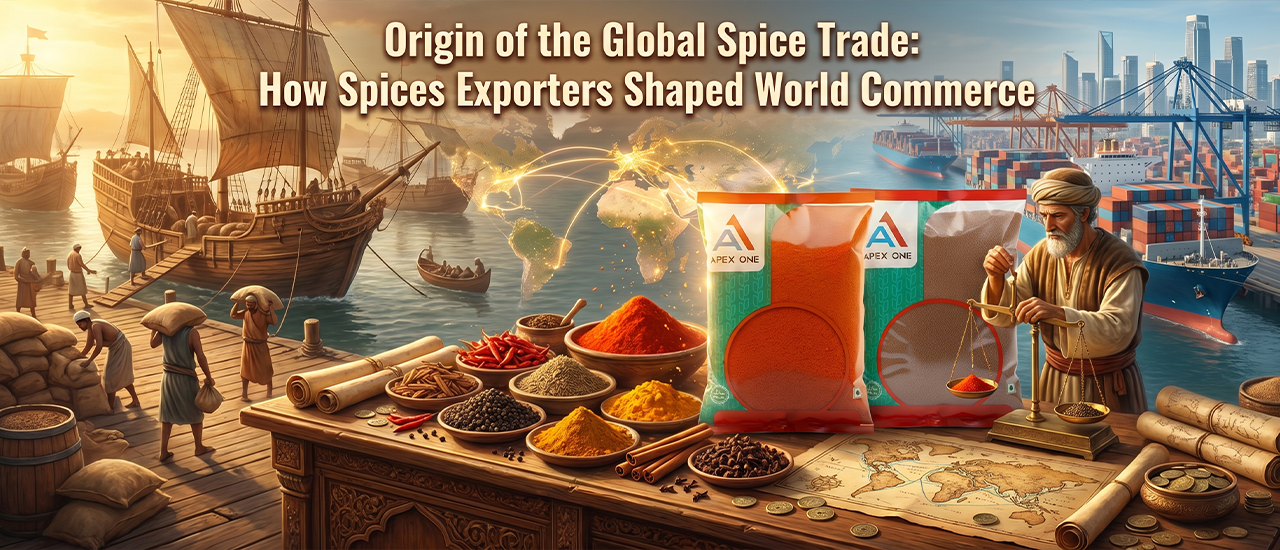
The story of spices is deeply woven into the fabric of global history. From ancient civilizations to modern international markets, spices have played a defining role in shaping economies, cultures, and trade routes. What began as a simple exchange of aromatic and medicinal ingredients gradually transformed into one of the most influential commercial systems in the world. At the heart of this transformation stands the spices exporter, a key player who connected distant lands and enabled the growth of global commerce.
Today, companies like Apex Star Trading continue this legacy by ensuring that high-quality spices reach markets across the globe. By understanding the origin and evolution of the spice trade, we gain valuable insights into how global trade systems were built and how they continue to thrive today.
The Early Origins of the Spice Trade
The global spice trade dates back thousands of years, long before modern transportation and logistics systems existed. Ancient civilizations such as India, China, Egypt, and Mesopotamia were among the earliest users and traders of spices. Spices were not just used for flavoring food but also for medicinal purposes, religious rituals, and preservation techniques.
Key early spices that drove trade included:
- Black pepper, often referred to as “black gold”
- Cinnamon, prized for its aroma and medicinal value
- Cloves and nutmeg, sourced from the Spice Islands (modern-day Indonesia)
- Cardamom and turmeric, widely used in Indian traditions
During this time, a spices exporter played a crucial role in transporting these valuable goods across regions. Trade routes such as the Silk Road and maritime pathways connected Asia with Europe and the Middle East, making spices one of the most sought-after commodities in the ancient world.
The Role of Spices in Shaping Global Trade Routes
As demand for spices grew, traders began exploring new routes to secure direct access to spice-producing regions. This demand led to the development of major trade networks that connected continents.
Important trade routes included:
- The Silk Road, linking Asia to Europe
- Maritime routes across the Indian Ocean
- The Red Sea and Mediterranean trade corridors
A spices exporter during this era was not just a supplier but also a navigator, risk-taker, and entrepreneur. These exporters helped establish connections between different cultures and economies, making spices a driving force behind early globalization.
The search for faster and more efficient routes also led to major explorations. European explorers such as Vasco da Gama and Christopher Columbus were motivated largely by the desire to control spice trade routes. This shows how significant the role of a spices exporter was in influencing global exploration and expansion.
The Colonial Era and Control of Spice Markets
The spice trade reached new heights during the colonial period. European powers such as Portugal, the Netherlands, and Britain sought to dominate spice-producing regions to control supply and maximize profits.
Key developments during this period included:
- Establishment of trading companies like the Dutch East India Company
- Colonization of spice-rich regions in Asia
- Monopolization of spice production and export
During this time, the role of a spices exporter became more structured but also more controlled. Exporters operated under strict regulations imposed by colonial powers. Despite these challenges, they continued to play a vital role in maintaining the flow of spices to global markets.
This period also marked the beginning of organized global trade systems, where documentation, pricing, and logistics started becoming more standardized.
Transition to Modern Spice Trade Systems
With the decline of colonial rule and the rise of independent nations, the spice trade evolved into a more open and competitive market. Modern transportation, communication, and technology revolutionized how spices were traded globally.
Today, a spices exporter operates within a highly organized framework that includes:
- Quality control and certification standards
- Efficient logistics and supply chain management
- International trade regulations and compliance
- Digital platforms for global communication and transactions
Companies like Apex Star Trading represent this modern evolution. By combining traditional knowledge with advanced business practices, they ensure that spices meet international quality standards while maintaining authenticity.
Types of Spices in Global Trade
The global spice market is diverse, with different categories of spices catering to various industries such as food, pharmaceuticals, and cosmetics.
Common Types of Spices Exported
- Whole spices
These include peppercorns, cloves, and cardamom, often preferred for their long shelf life. - Ground spices
Finely processed spices like turmeric powder and chili powder, widely used in cooking. - Organic spices
Grown without synthetic chemicals, these are increasingly popular in international markets. - Blended spices
Custom spice mixes designed for specific cuisines or industrial applications.
A professional spices exporter ensures that each type is processed, packaged, and delivered according to market requirements. Apex Star Trading specializes in offering a wide range of these spice categories, meeting the needs of diverse global clients.
Benefits of the Global Spice Trade
The global spice trade has brought numerous benefits to economies, businesses, and consumers worldwide.
Economic Benefits
- Generates employment in farming, processing, and logistics
- Boosts export revenues for producing countries
- Encourages infrastructure development in rural areas
Cultural Exchange
- Introduces new flavors and cuisines across regions
- Promotes culinary innovation and diversity
- Strengthens cultural connections through food
Health and Wellness
- Provides access to natural and medicinal ingredients
- Supports traditional healing practices
- Encourages healthier cooking alternatives
A spices exporter plays a vital role in delivering these benefits by ensuring a steady and reliable supply of spices to international markets.
Uses of Spices Across Industries
Spices are not limited to culinary applications. Their versatility makes them essential across multiple industries.
Major Uses of Spices
- Food and beverages
Used for flavoring, coloring, and preserving food products. - Pharmaceuticals
Many spices have medicinal properties used in traditional and modern medicine. - Cosmetics
Natural ingredients in skincare and beauty products. - Aromatherapy
Essential oils derived from spices are used for relaxation and therapy.
Apex Star Trading, as a trusted spices exporter, ensures that spices are processed and delivered in forms suitable for these diverse applications.
Challenges Faced by Spices Exporters
Despite its growth, the spice trade faces several challenges that exporters must navigate carefully.
Key Challenges
- Fluctuating market prices due to supply-demand imbalances
- Strict international quality and safety regulations
- Climate change is affecting crop yields
- Logistics and transportation disruptions
A reliable spices exporter must have strong systems in place to manage these challenges effectively. Apex Star Trading focuses on quality assurance, efficient supply chain management, and customer satisfaction to overcome these obstacles.
Why Choose Apex Star Trading
In today’s competitive market, choosing the right spices exporter is crucial for ensuring quality and reliability. Apex Star Trading stands out as a trusted partner in the global spice industry.
Key Reasons to Choose Apex Star Trading
- Commitment to quality
Ensures that all spices meet international standards and customer expectations. - Wide product range
Offers a diverse selection of spices to cater to different industries and markets. - Strong global network
Efficiently connects suppliers and buyers across multiple regions. - Customer-focused approach
Prioritizes long-term relationships and tailored solutions. - Reliable supply chain
Ensures timely delivery and consistent product availability.
As a professional spices exporter, Apex Star Trading combines experience, expertise, and innovation to deliver excellence in every transaction.
The Future of the Global Spice Trade
The spice trade continues to evolve with changing consumer preferences and technological advancements. Trends such as organic farming, sustainable sourcing, and digital trade platforms are shaping the future of the industry.
Key future trends include:
- Increased demand for organic and ethically sourced spices
- Use of technology for supply chain transparency
- Growth of e-commerce in spice trading
- Focus on sustainability and environmental responsibility
A forward-thinking spices exporter like Apex Star Trading is well-positioned to adapt to these trends and lead the market in innovation and quality.
Conclusion
The origin of the global spice trade is a remarkable journey that highlights the power of commerce in connecting the world. From ancient trade routes to modern supply chains, spices have played a central role in shaping economies, cultures, and global interactions.
The spices exporter has been a key contributor to this journey, bridging the gap between producers and consumers across continents. Today, companies like Apex Star Trading continue this legacy by delivering high-quality spices while embracing modern business practices.
As the global demand for spices continues to grow, the importance of reliable exporters will only increase. By understanding the history and significance of the spice trade, businesses and consumers alike can appreciate the value that spices bring to our daily lives and the global economy.